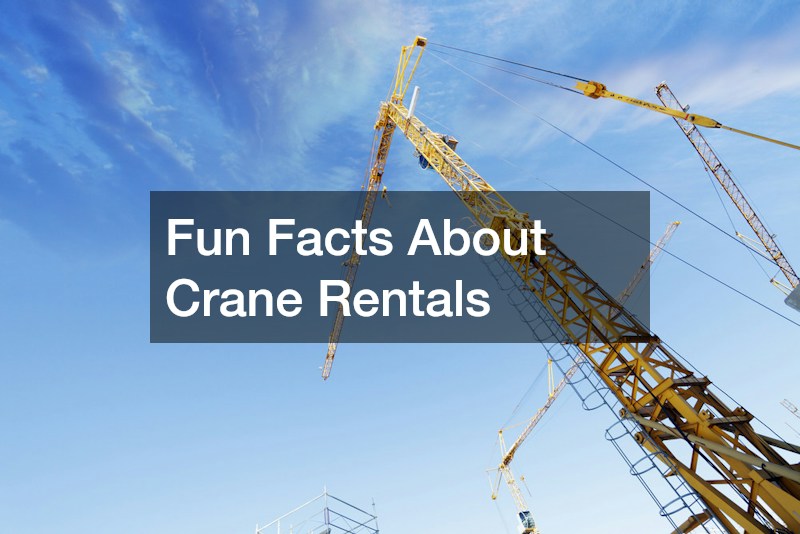
This article explores the intriguing world of crane rentals, uncovering interesting facts and answers to common questions. Whether you are considering a crane rental for construction or event purposes, this guide provides valuable insights. The rental market offers a diverse range of crane types to cater to various needs.
Understanding each type’s strengths and applications is essential for making an informed decision. Furthermore, being aware of the rental processes and safety regulations can significantly impact the efficiency and safety of a project involving crane rentals.
What Types of Cranes Are Available for Rent?
This section discusses the various types of cranes that can be rented, including tower cranes, rough terrain cranes, and all-terrain cranes. Tower cranes are essential for constructing tall buildings, providing stability and a high lifting capacity. These cranes are fixed to the ground and engineered to lift and move heavy materials to significant heights. On the other hand, rough terrain cranes are optimized for challenging surfaces, ideal for off-road construction sites where stability on uneven grounds is crucial. Lastly, all-terrain cranes combine the capabilities of mobile and rough terrain cranes, offering versatility with robust features for different site conditions.
Crane rentals often depend on the project requirements, such as lifting capacity, height reach, and terrain. For large scale construction projects, high lifting capacity cranes like crawler cranes may be rented. Crawler cranes feature tracks for mobility on site without needing extensive setup. For urban projects, mobile cranes offer quick deployment and versatility, making them popular choices. Additionally, information on local regulations and site conditions should guide the selection of the appropriate crane type, ensuring compliance and safety.
Factory overhead cranes and truck-mounted cranes are other notable types available for rent. Factory overhead cranes are crucial for in-house lifting tasks in industrial setups, moving materials across short distances efficiently. Truck-mounted cranes, mounted on trucks, provide flexibility for quick transitions between different sites, especially useful in short-term projects or multiple locations in a single day.
How Does the Rental Process Work?
The rental process involves several vital steps, beginning with identifying the project’s requirements and selecting a suitable crane type. Once you have clarity on the project specifics, contacting a rental service to discuss availability is the next step. Rental companies provide detailed equipment specifications, helping you match crane capabilities with project tasks. Price negotiation and contract terms follow, addressing aspects like duration, maintenance responsibilities, and potential penalties. Before finalizing any rental agreement, ensure that you have thoroughly reviewed all terms related to equipment use and safety obligations.
Delivery logistics form a critical component of the crane rental process. Rental companies usually organize transport of the crane to and from the site, considering factors like site accessibility and transit routes. Arrangements should account for any required onsite assembly or specific logistical challenges, such as traffic or weight limits on routes. Clear communication with the rental service about the project timeline can optimize resource allocation and avoid costly delays. Having a defined schedule ensures that the crane is available when needed and returned promptly to avoid extra charges.
Comprehensive planning is integral to a successful crane rental experience, preventing unforeseen issues that may disrupt the project timeline. It’s crucial that project managers coordinate with crane operators and supervisors, ensuring alignment on project phases and safety protocols. Back-up strategies for equipment failure or unexpected events can help mitigate potential disruptions.
What Are the Safety Considerations When Renting a Crane?
This section highlights important safety measures and regulations to ensure safe crane operation during rentals. Compliance with local and national safety standards is crucial, as cranes are involved with significant weights and heights. Operators should be certified and knowledgeable about the equipment, adhering to operational guidelines to prevent accidents. Regular maintenance and safety checks by the rental company ensure that equipment is in optimal condition. Understanding that cranes must often work near people and structures emphasizes the importance of adhering to safety protocols.
Proper site assessment and planning contribute significantly to safety during crane operations. Evaluate site conditions for potential hazards such as overhead lines or unstable ground that may affect crane stability. This entails coordinating with other teams on site to establish secure zones and operating ranges, minimizing the risk of incidents. Clear communication lines must be maintained among all project stakeholders to relay any safety concerns or updates swiftly. Indeed, fostering a culture of safety awareness and preparedness can prevent costly and dangerous errors.
Understanding the ins and outs of crane rentals can enhance your project and ensure a smooth operation. Whether you are aware of the types available, the rental process, or safety precautions, being informed will lead to better decisions in crane utilization. Companies that make strategic choices concerning crane types and rental conditions can gain financial and operational benefits. Safety remains a paramount consideration, with adherence to regulations and readiness for potential challenges being critical to success. Ultimately, knowledge of these facets supports more efficient project execution and contributes to achieving desired outcomes.